Category:

Blog

7 Best Things to Do in the Virgin Islands

The Virgin Islands are world-famous for their beaches, featuring soft white sand, turquoise waters, and breathtaking views. Must-visit beaches include Magens Bay on St. Thomas, known for its calm waters perfect for swimming and paddleboarding, and Trunk Bay on St. John, famous for its underwater snorkel trail. Other gems include Honeymoon Beach, Maho Bay, Cinnamon Bay, and Leinster Bay.

Tip: Arrive early for the best spots, especially at popular beaches like Trunk Bay.

 2. Snorkel and Discover Marine Life

Snorkeling is a top activity in the Virgin Islands. Clear waters and vibrant coral reefs make it easy to spot tropical fish, sea turtles, and colorful underwater gardens.

  • Waterlemon Cay and Leinster Bay are among the best snorkel spots on St. John.

  • Buck Island Reef National Monument near St. Croix offers a famous underwater trail with abundant marine life.

  • Coki Beach on St. Thomas is ideal for families and first-time snorkelers.

Pro tip: Use reef-safe sunscreen and avoid touching coral or marine wildlife.

 3. Visit Coral World Ocean Park

Coral World Ocean Park on St. Thomas offers interactive marine experiences. Visitors can explore an underwater observatory, meet sea lions, and try activities like snuba or sea lion feedings. The park combines education and fun, making it perfect for families and children.

🇺🇸 4. Explore Virgin Islands National Park

Virgin Islands National Park covers much of St. John, blending lush forests, historic ruins, and scenic beaches.

Activities include:

  • Hiking through trails that pass through tropical forests and old plantation ruins.

  • Swimming, kayaking, and windsurfing in calm coves.

  • Wildlife spotting and relaxing on some of the Caribbean’s most beautiful beaches.

This park is ideal for nature lovers, hikers, swimmers, and anyone looking for both adventure and tranquility.

 5. Take a Boat Tour or Island Cruise

Experiencing the Virgin Islands by boat is unforgettable. Tours allow visitors to hop between islands, snorkel offshore reefs, sail to hidden coves, and visit secluded beaches. Sunset sails or private charters provide a romantic or adventurous twist to a typical day trip. Whether it’s a catamaran adventure, beach hopping, or visiting nearby islands, the boat experience is a highlight of any trip.

 6. Discover Culture & History

The Virgin Islands are rich in history and culture. Highlights include Emancipation Garden in St. Thomas, which commemorates the freeing of slaves, and colonial ruins and forts on St. Croix that showcase the islands’ European and local history. Towns like Charlotte Amalie and Christiansted offer vibrant markets, local food, and shopping, providing a glimpse of island life beyond the beaches.

 7. Adventure and Local Experiences

For thrill-seekers and culture enthusiasts alike, the Virgin Islands offer a variety of unique experiences:

  • Jet skiing, parasailing, and paddleboarding.

  • Night kayak glow tours in clear waters.

  • Sampling local cuisine and tasting island-made rum.

These activities allow travelers to mix adventure, relaxation, and cultural immersion for a truly memorable trip.

Read More: Japan in 7 Days: Ultimate First-Timer Itinerary

Conclusion

The Virgin Islands are a paradise where natural beauty, rich culture, and thrilling adventure come together. From relaxing on world-famous beaches to snorkeling vibrant reefs, exploring historic sites, and cruising between islands, every experience leaves a lasting impression. Whether your goal is a serene escape, outdoor adventure, or cultural exploration, the Virgin Islands promise unforgettable memories and a true taste of Caribbean bliss.

 FAQs

1. What is the best time to visit the Virgin Islands?
The ideal time is December to April for dry, sunny weather, though the shoulder seasons offer fewer crowds and better travel deals.

2. Do I need to book snorkeling tours in advance?
It’s recommended, especially during peak travel months, to secure your spot and get the best prices.

3. Can you visit both USVI and BVI in one trip?
Yes. Many boat charters and ferries allow travelers to visit both U.S. and British Virgin Islands in a single trip.

4. Are the beaches kid-friendly in the Virgin Islands?
Absolutely. Beaches like Magens Bay have calm, shallow waters suitable for children.

5. What is Virgin Islands National Park known for?
It’s famous for its scenic beaches, snorkeling trails, hiking paths, historic ruins, and protected natural landscapes.
0 comments
0 FacebookTwitterPinterestEmail
Japan in 7 Days: Ultimate First-Timer Itinerary

Japan is a mesmerizing mix of ancient traditions and modern innovations. From futuristic skyscrapers to serene temples, from bustling cities to tranquil landscapes, Japan offers an unforgettable travel experience. A 7-day itinerary is perfect for first-time visitors to explore iconic cities like Tokyo, Kyoto, Osaka, and Hiroshima while experiencing the rich culture, delicious cuisine, and breathtaking natural beauty.

With Japan’s efficient rail network, including the famous Shinkansen bullet trains, traveling across the country is seamless, allowing you to maximize your adventure without wasting time on transportation. This itinerary balances modern city life, historical landmarks, natural wonders, and culinary delights, ensuring each day is filled with memorable experiences.

Day-by-Day Itinerary

Day 1 – Arrival in Tokyo

Arrive at Narita or Haneda Airport and take a train or shuttle into central Tokyo. Spend the day exploring your neighborhood, relaxing after the flight, and enjoying views from the Tokyo Metropolitan Government Building observatory. In the evening, wander the vibrant streets of Shinjuku or Shibuya to experience Tokyo’s neon-lit energy.

Day 2 – Tokyo Highlights

Begin at Shibuya Crossing, the world’s busiest pedestrian scramble. Visit Meiji Shrine for a peaceful retreat and explore Harajuku’s Takeshita Street for quirky shops and unique snacks. In the afternoon, head to Asakusa to see the historic Sensō-ji Temple and shop along Nakamise Street.

Day 3 – Tokyo Culture and Markets

Visit Ueno Park, home to museums, temples, and seasonal cherry blossoms. Explore Ameya-Yokocho Market for local food and souvenirs. In the afternoon, dive into Akihabara’s electronics, anime, and gaming culture or enjoy panoramic city views from the Tokyo Skytree.

Day 4 – Kyoto: Temples and Tradition

Take the bullet train to Kyoto. Explore Fushimi Inari Shrine with its thousands of vermillion torii gates. Visit Kiyomizu-dera Temple and enjoy the city’s scenic views. In the evening, stroll through Gion, Kyoto’s historic geisha district, and enjoy traditional tea and quiet lanes.

Day 5 – Kyoto: Bamboo Forest and Golden Pavilion

Start the day at Arashiyama Bamboo Forest, visiting Tenryu-ji Temple and its serene gardens. In the afternoon, head to Kinkaku-ji, the famous Golden Pavilion, and explore Kyoto’s charming streets and traditional shops.

Day 6 – Osaka: Food and Fun

Travel to Osaka, Japan’s culinary capital. Visit Osaka Castle for history and views. Explore Dōtonbori, famous for neon lights, street food, and local delicacies like takoyaki and okonomiyaki. Optionally, visit Universal Studios Japan for an exciting entertainment experience.

Day 7 – Hiroshima and Miyajima (Optional)

Take a day trip to Hiroshima to visit the Peace Memorial Park and Museum. Continue to Miyajima Island to see the iconic floating torii gate of Itsukushima Shrine. Alternatively, return to Tokyo for last-minute shopping or relaxation before departure.

 Travel Tips

  • Transport: Purchase a Japan Rail Pass before arriving for cost-effective, fast travel between cities.

  • Accommodation: Stay near major train stations to reduce commute time.

  • Seasonal Advice: Cherry blossom season (March–April) is breathtaking but busy; book accommodations early.

  • Food: Don’t miss sushi, ramen, takoyaki, okonomiyaki, and local regional specialties.

  • Packing: Comfortable shoes are a must for city walking and temple visits.

Read More: Prague Itinerary: Ultimate Travel Guide for First-Time

 Conclusion

A 7-day Japan itinerary offers a perfect balance of modern city life, traditional culture, culinary adventures, and natural beauty. From Tokyo’s bustling streets and towering skyscrapers to Kyoto’s serene temples and historic districts, each day brings a new experience. Osaka delights the senses with its vibrant food scene, while Hiroshima and Miyajima offer reflection and awe-inspiring sights.

Efficient transportation like the Shinkansen and JR Pass allows for seamless travel, maximizing sightseeing and minimizing stress. A carefully planned week ensures you experience Japan’s rich culture, stunning architecture, scenic landscapes, and unique cuisine without feeling rushed. By following this itinerary, travelers gain a deep appreciation for Japan’s past and present, creating memories that will last a lifetime. Whether walking through bamboo forests, exploring neon-lit city streets, or tasting regional delicacies, a week in Japan is an enriching, unforgettable adventure.

 FAQs

1. What is the best 7-day Japan itinerary for first-time visitors?
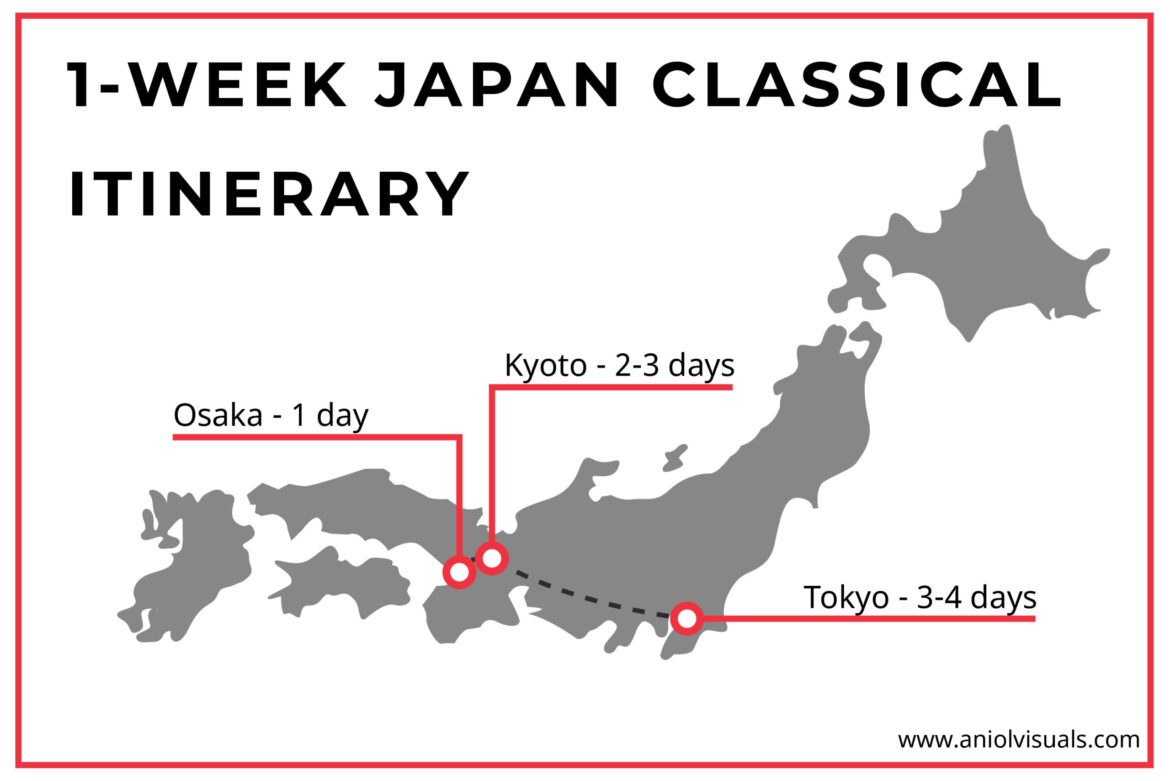
A recommended route is Tokyo (3 days), Kyoto (2 days), Osaka (1 day), with an optional Hiroshima and Miyajima day trip.

2. Should I buy a Japan Rail Pass for 7 days?
Yes, it is cost-effective if traveling between multiple cities, especially on bullet trains.

3. How many days should I spend in Tokyo, Kyoto, and Osaka?
Tokyo 3 days, Kyoto 2–3 days, Osaka 1–2 days, depending on interests and pace.

4. Can I visit Mount Fuji in 7 days?
Yes, a day trip from Tokyo to Mount Fuji (Kawaguchiko area) can fit between Day 2–3.

5. Is 7 days enough to see Japan?
Yes, it offers a great overview of culture, history, modern life, and cuisine. More days allow a slower pace or extra destinations.

0 comments
0 FacebookTwitterPinterestEmail
How to Start a Travel Blog: A Complete Beginner’s Guide

Starting a travel blog can be one of the most exciting journeys you’ll ever take. Whether you want to share your travel stories, inspire others, document adventures, or even turn your passion into a career, a travel blog gives you a platform to do it all. Travel blogging is more than writing—it’s about connecting with readers, sharing practical tips, and building a community of like-minded explorers.

But getting started can feel overwhelming. From choosing your niche and naming your blog to setting up your website, creating content, and promoting it effectively, there are essential steps to follow. This guide provides a clear, step-by-step roadmap to launch your travel blog confidently, focus on quality content, and engage real readers from day one. By following these strategies, you can turn your love of travel into an inspiring and influential online presence.

1. Decide Your Travel Blog Niche

Before creating your blog, decide what kind of travel stories you want to share. Will it be budget travel, luxury trips, family adventures, solo travel, food-focused experiences, or destination guides? Choosing a niche helps attract the right audience and makes your blog more focused. A blog about budget backpacking will attract different readers than one about luxury European travel. Pick a niche that matches your expertise and passion to keep your content authentic and engaging.

2. Choose a Memorable Blog Name

Your blog name becomes your brand. Make it unique, memorable, and easy to spell. Choose a name that reflects your niche and personality. Keep it simple, short, and broad enough to allow growth as your blog expands. Make sure the domain name and social media handles are available to ensure consistent branding across platforms.

3. Pick a Blogging Platform and Hosting

After choosing a name, select a platform and hosting service. WordPress is the most popular for flexibility and SEO benefits. Beginners may also consider simpler platforms like Wix or Blogger. Your hosting provider stores your blog online. Shared hosting is affordable for starters, while WordPress hosting offers speed and reliability as your traffic grows.

4. Set Up Your Blog and Design It

Install your blogging platform and choose a theme that matches your brand. Customize colors, fonts, layout, and logo. A clean, mobile-friendly design enhances user experience and keeps readers engaged. Make navigation simple, and ensure your content is easy to read.

5. Create Your First Content Plan

Plan your blog content before launching. Identify categories like destination guides, travel tips, packing lists, hotel reviews, or itineraries. A structured plan ensures consistent posting and helps attract readers. Launch your blog with 3–5 high-quality posts so visitors immediately find valuable content.

6. Write Friendly and Helpful Posts

Your posts should offer value, be engaging, and answer reader questions. Include real travel experiences, tips, and recommendations. Use headings, short paragraphs, and visuals to make reading easier. Authenticity and helpful insights keep readers coming back.

7. Optimize for Search Engines (SEO)

SEO helps your blog get discovered. Use keywords in titles, headings, and content. Write descriptive meta descriptions, add alt text to images, and link between your posts. Basic SEO skills improve your blog’s visibility and organic traffic over time.

8. Add Photos, Videos, and Visual Content

Visual content is essential for travel blogs. Use original photos, maps, and videos to bring your stories to life. Optimize images for faster loading and include descriptive alt text to improve accessibility and SEO.

9. Launch and Promote Your Blog

When your blog is ready, announce the launch to friends, family, and social media followers. Share content on Instagram, Pinterest, and Facebook. Pinterest works well for travel blogs because users search for travel ideas. Use hashtags and create eye-catching visuals to attract readers.

10. Engage with Your Readers and Grow

Engage your audience through comments, email newsletters, and social media interaction. Building relationships with readers fosters loyalty and encourages repeat visits. Consistent interaction turns your blog from a website into a thriving travel community.

Read More: Prague Itinerary: Ultimate Travel Guide for First-Time

Conclusion 

Starting a travel blog is both a creative adventure and a practical project. From picking the right niche and blog name to designing your site and publishing valuable content, every step shapes your blog’s success. SEO, promotion, and visuals help you stand out, while authentic stories and helpful tips build trust with your readers. Consistency is key: regularly sharing high-quality posts keeps your audience engaged and attracts new visitors.

Your travel blog is a reflection of your personal journey, so authenticity and genuine insights are what make it memorable. With dedication, planning, and the right strategies, you can create a travel blog that not only documents your adventures but also inspires and guides others to explore the world. The journey of blogging can be just as rewarding as the travels you share.

 FAQs

1. How much does it cost to start a travel blog?
Costs vary: free platforms exist, but professional blogs with hosting and domain start around $50–$100 per year.

2. Which platform is best for travel blogging?
WordPress is highly recommended for flexibility, SEO benefits, and long-term growth.

3. Do I need technical skills to start a blog?
No. Basic setup skills are enough, and many platforms provide easy-to-use tools for beginners.

4. How do travel bloggers make money?
Through ads, affiliate marketing, sponsored posts, partnerships, and selling digital products or guides.

5. How often should I publish content?
Aim for at least one quality post per week initially; consistency helps build an audience and improve search rankings.

0 comments
0 FacebookTwitterPinterestEmail
Prague Itinerary: Ultimate Travel Guide for First-Time

Planning the perfect Prague itinerary is all about blending history, culture, and modern charm. Prague, the capital of the Czech Republic, is one of Europe’s most picturesque cities, known for its medieval architecture, romantic streets, and vibrant local culture. From the iconic Charles Bridge to the historic Prague Castle, every corner of the city tells a story. This guide is designed for first-time visitors as well as those returning for a deeper experience.

Whether you have just a weekend or a full week, you’ll find tips to explore top landmarks, discover hidden gems, enjoy local cuisine, and experience Prague’s rich heritage. With compact neighborhoods, efficient public transport, and walkable streets, exploring Prague is easy and enjoyable. By following this itinerary, you’ll be able to create lasting memories, take amazing photos, and make the most of your time in this enchanting European capital.

Best Time to Visit Prague

Prague is beautiful year-round, with each season offering something unique:

  • Spring (April–June): Mild weather, blooming parks, and fewer crowds make sightseeing enjoyable.

  • Summer (July–August): Lively streets, outdoor cafes, and long daylight hours; expect more tourists.

  • Autumn (September–October): Comfortable temperatures and colorful foliage create a scenic backdrop.

  • Winter (December–February): Magical Christmas markets, snow-dusted streets, and cozy cafés; cold but charming.

How Many Days Should You Spend in Prague?

  • 2 days: Enough to see the highlights if you’re on a short trip.

  • 3–4 days: Ideal to explore major attractions without rushing.

  • 5+ days: Perfect for day trips and deeper cultural exploration.

Most travelers choose 3 days as the perfect balance between seeing landmarks and enjoying the city at a relaxed pace.

Day 1: Explore Old Town & Historic Heart

Old Town Square & Astronomical Clock

Start in the historic Old Town Square, surrounded by stunning Gothic and Baroque architecture. Witness the Astronomical Clock, a medieval masterpiece, and enjoy the street performers and lively atmosphere. Climbing the Old Town Hall Tower offers panoramic city views.

Churches and Architecture

  • Church of Our Lady before Týn: Iconic twin towers defining Prague’s skyline.

  • St. Nicholas Church: Baroque interiors and remarkable frescoes.

Charles Bridge

Walk to Charles Bridge, one of the city’s most famous landmarks. Early morning is best to avoid crowds. The bridge features statues, artists, and sweeping views of the Vltava River and Prague Castle.

Dinner and Evening

Relax in a local restaurant or café. Try traditional Czech dishes such as goulash, svíčková, or street pastries like trdelník. Evening walks in the Old Town reveal magical views with illuminated buildings.

Day 2: Prague Castle & Hilltop Views

Prague Castle Complex

Spend the morning exploring Prague Castle, one of the largest castle complexes in the world. Highlights include:

  • St. Vitus Cathedral: Gothic architecture with stunning stained glass windows.

  • Golden Lane: Quaint medieval houses with historical charm.

  • Royal Palace & Gardens: Grand interiors and beautiful views of the city.

Arrive early to beat the crowds and enjoy a cooler morning.

Lunch with Castle Views

Enjoy lunch in a nearby café while taking in the castle and city panoramas.

Petřín Hill & Observation Tower

Climb or take the funicular to Petřín Hill. Walk the gardens, explore hidden paths, and ascend the Petřín Lookout Tower for panoramic views of Prague. Sunset here is particularly beautiful.

Evening in Lesser Town (Malá Strana)

Wander Malá Strana’s charming streets, stop by historic pubs, and try local Czech beer. The area is perfect for evening strolls and photography.

Day 3: Jewish Quarter, Parks & Culture

Jewish Quarter (Josefov)

Morning exploration of Josefov reveals centuries of Jewish history. Key sites:

  • Jewish Museum: Collection of historical artifacts and synagogue interiors.

  • Historic Synagogues & Cemetery: Reflective and historically significant landmarks.

Spend a few hours to explore respectfully.

Franciscan Garden Picnic

Relax in the Franciscan Garden with a picnic lunch. This serene park is ideal for a break from sightseeing.

Optional Museums

  • Transport Museum: Displays vintage trams and buses.

  • Art and History Museums: Offer deeper insights into Czech culture and modern art.

Evening River Cruise

End your trip with a scenic Vltava River cruise. Sunset cruises provide breathtaking city views and a memorable finale.

Optional Day Trips from Prague

  • Kutná Hora: Gothic churches and the Bone Chapel.

  • Český Krumlov: A fairytale town with a UNESCO-listed historic center.

  • Karlovy Vary: Famous spa town with hot springs and colorful architecture.

All these towns are accessible by train or guided tours and make excellent day trips.

Practical Travel Tips

Transport

Prague’s public transport is efficient, including trams, metro, and buses. Central areas are walkable, making exploration easy.

Tickets & Booking

  • Book skip-the-line tickets for Prague Castle and tower views to save time.

  • Multi-day public transport passes are cost-effective for frequent travel.

Food & Drink

  • Try traditional Czech dishes and world-renowned beers.

  • Avoid restaurants immediately next to major tourist sites as prices tend to be higher.

Read More: Pompeii: Exploring the Lost City of the Romans

Conclusion 

A carefully planned Prague itinerary ensures a perfect blend of history, culture, and relaxation. The city’s medieval streets, iconic Charles Bridge, and grand Prague Castle offer experiences you won’t forget. Wander through the Jewish Quarter, enjoy quiet moments in hidden gardens, and savor authentic Czech cuisine while exploring vibrant neighborhoods. With 2–4 days, you can capture the essence of Prague without feeling rushed, including iconic landmarks, panoramic viewpoints, and cultural experiences. Optional day trips offer a chance to explore fairy-tale towns and historic sites beyond the city.

Whether strolling across bridges at sunrise, enjoying local beer at sunset, or visiting museums and cathedrals, Prague invites travelers to immerse themselves fully in its charm. Following this guide helps first-time visitors and returning travelers alike to navigate efficiently, see the best sights, and create lasting memories. Prague’s blend of historic grandeur and modern vibrancy makes it a destination you’ll treasure for a lifetime.

 FAQs

1. What is the best 3-day Prague itinerary?
A 3-day itinerary includes Old Town Square, Charles Bridge, Prague Castle, Petřín Hill, and the Jewish Quarter.

2. How many days do I need in Prague to see everything?
3–4 days are ideal for major sights, museums, and relaxed exploration.

3. Is Prague walkable for tourists?
Yes. Most attractions are within walking distance, and public transport covers longer trips.

4. What are must-see places in Prague?
Old Town Square, Astronomical Clock, Charles Bridge, Prague Castle, Petřín Tower, and the Jewish Quarter.

5. Can I do day trips from Prague?
Yes. Popular options include Kutná Hora, Český Krumlov, and Karlovy Vary.

0 comments
0 FacebookTwitterPinterestEmail
Pompeii: Exploring the Lost City of the Romans

Pompeii, located near Naples in Italy, is one of the most fascinating archaeological sites in the world. Buried under layers of volcanic ash after the catastrophic eruption of Mount Vesuvius in 79 AD, the city remained frozen in time for centuries. The sudden eruption preserved buildings, streets, artwork, and even human forms, offering a unique window into ancient Roman life.

Walking through the ruins of Pompeii, visitors can see homes, baths, temples, theaters, and marketplaces almost exactly as they were nearly two thousand years ago. This city tells a story of daily life, ambition, art, and tragedy. Visiting Pompeii is not just a sightseeing trip; it is an immersive historical experience where every stone, fresco, and artifact has a story to tell.1. Iconic Sights in Pompeii

The Amphitheatre

The Pompeii Amphitheatre is one of the oldest surviving Roman arenas, capable of seating around 20,000 spectators. Gladiator fights, theatrical performances, and public events entertained the citizens here. The structure provides a glimpse into the Roman love for entertainment and public gatherings, and walking through its arches evokes the energy of a bustling city long gone.

The Forum

The Forum was the political, religious, and commercial heart of Pompeii. It hosted markets, political assemblies, religious ceremonies, and civic events. Surrounding the Forum are temples, basilicas, and administrative buildings. Exploring this area gives visitors a clear sense of how organized and vibrant Roman urban life was.

The Garden of the Fugitives

This site contains plaster casts of victims who perished during the eruption. The casts capture the final moments of life, creating a haunting and deeply emotional connection to the people who lived here. It is a powerful reminder of the sudden tragedy that befell Pompeii.

Villa of the Mysteries

The Villa of the Mysteries, located on the outskirts of Pompeii, is renowned for its stunning frescoes that depict mysterious initiation rites. The vivid artwork offers insight into Roman religious practices and domestic luxury, showcasing the artistic and cultural sophistication of the time.

House of the Centenary

This was one of Pompeii’s most luxurious residences, complete with private baths, elaborate frescoes, and intricate mosaics. It even contains one of the earliest depictions of Mount Vesuvius. Visiting this house allows travelers to understand the lifestyle of Pompeii’s elite citizens.

Stabian Baths

Public baths were central to Roman daily life, serving both hygienic and social functions. The Stabian Baths are among the oldest and most extensive in Pompeii, featuring hot and cold baths, changing rooms, and exercise areas. They offer a fascinating glimpse into Roman engineering and social customs.

Theatres

Pompeii contains two theatres: the large amphitheatre for gladiatorial events and a smaller theatre for musical and dramatic performances. These spaces illustrate the cultural importance of art, drama, and entertainment in Roman society.2. Practical Tips for Visiting Pompeii

Plan Your Visit Carefully

Pompeii is expansive. A focused visit to the main highlights can take 3–5 hours, while exploring the entire site thoroughly could require a full day. Planning ahead ensures you don’t miss key sights.

Wear Comfortable Shoes

The streets are cobblestoned and uneven, so sturdy, closed-toe shoes are essential for comfort and safety. Walking long distances over ancient stones can be challenging without proper footwear.

Stay Hydrated and Protected

Sun exposure can be intense. Bring water, wear sunscreen, and carry a hat or sunglasses. Rest in shaded areas when possible to enjoy the visit without discomfort.

Respect the Archaeology

Pompeii is a priceless historical site. Avoid touching frescoes, stepping on fragile structures, or removing artifacts. Preservation depends on responsible visitor behavior.

Consider a Guide

Hiring a knowledgeable guide can dramatically enhance your visit. Guides provide historical context, stories, and cultural insights that transform a walk through ruins into a deeper understanding of Roman life.3. Immersive Experiences

Walk the Ancient Streets

Strolling through Pompeii’s streets allows visitors to imagine daily life. You can see shops, bakeries, and even graffiti on walls, offering a personal glimpse into the lives of ordinary Romans.

Explore the Houses

Many houses in Pompeii, like the House of the Faun or the House of the Vettii, feature frescoes, mosaics, and intricate designs that reveal Roman tastes in art and luxury. Each residence tells a story of the family who lived there.

Visit the Temples

Pompeii was a city devoted to religion. Temples dedicated to Jupiter, Apollo, and Venus highlight Roman devotion to gods and goddesses. These sacred spaces provide insight into spiritual life and public ceremonies.

Discover Local Art

Frescoes and mosaics found throughout Pompeii depict mythological scenes, everyday life, and nature. They illustrate the Romans’ love for beauty and detail, and their desire to document their world artistically.

Nearby Excursions

While Pompeii is the main attraction, nearby sites like Herculaneum and Mount Vesuvius provide complementary experiences. Exploring these areas gives a broader understanding of the eruption’s impact and the region’s history.

4. Practical Tips for Travelers

  • Timing: Early morning visits are best to avoid crowds and heat.

  • Food: Bring snacks and water; there are some cafes outside central ruins.

  • Accessibility: Pompeii has uneven terrain; plan for limited mobility if needed.

  • Photography: Allowed in most areas; avoid using flash on fragile frescoes.

  • Souvenirs: Look for local crafts and historical books to remember your visit.

Read More: 5 Perfect Days in Paris: A Complete Itinerary

Conclusion 

Pompeii is a journey through time. It offers an unparalleled glimpse into ancient Roman life, capturing both the grandeur and the tragedy of a society frozen in an instant. Walking through the streets, visiting villas, and observing public spaces allows travelers to experience the rhythm of daily life nearly two thousand years ago. The emotional impact of sites like the Garden of the Fugitives reminds us that history is not just about artifacts but about the people who lived, loved, and worked within these walls.

Pompeii is not only an archaeological treasure but also a storybook of human civilization, resilience, and vulnerability. To visit Pompeii is to step into a living classroom of history, art, and culture. With careful planning, respect for the site, and a curious mind, every visitor can leave with a deeper appreciation of the Romans’ enduring legacy and the fragility of life in the face of nature’s power.

FAQs

1. What are the must-see places in Pompeii?
The Amphitheatre, Forum, Villa of the Mysteries, House of the Centenary, Garden of the Fugitives, and Stabian Baths are the top sites to explore.

2. How long should I spend in Pompeii?
A visit to see the main highlights takes 3–5 hours, but a full day is ideal for in-depth exploration.

3. Should I hire a guide?
Yes. A knowledgeable guide provides historical context, stories, and cultural insights, enhancing the experience significantly.

4. What should I wear?
Wear comfortable, sturdy shoes for walking, and dress for sun protection with hats, sunglasses, and sunscreen.

5. Are there places to eat inside Pompeii?
There are cafes near the main entrances, but it’s wise to carry water and light snacks for a longer visit.

0 comments
0 FacebookTwitterPinterestEmail
5 Perfect Days in Paris: A Complete Itinerary

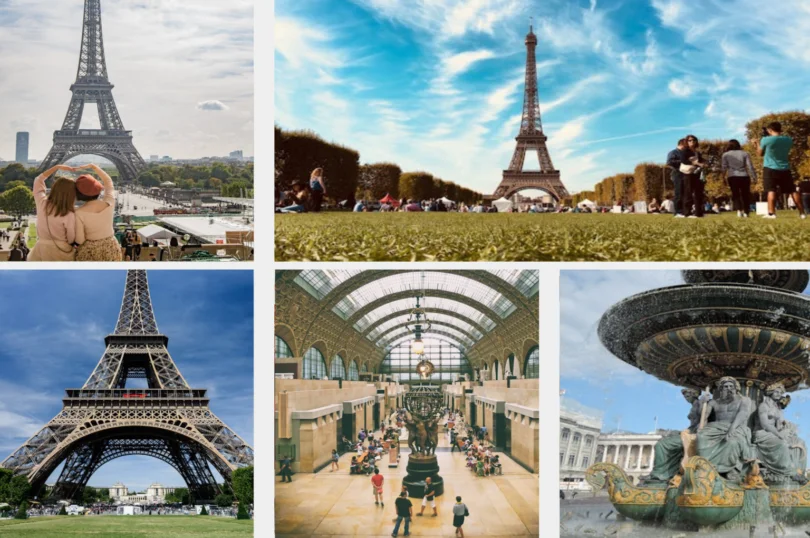
Paris, the City of Light, is a destination that captures the imagination of travelers worldwide. Known for its stunning architecture, world-class museums, charming cafés, and vibrant neighborhoods, Paris offers an unforgettable blend of culture, history, and romance. Spending five days in the city allows visitors to experience both its iconic landmarks and hidden gems without feeling rushed. From standing beneath the Eiffel Tower to wandering the cobbled streets of Montmartre, exploring art in the Louvre, or relaxing in elegant gardens, every day offers a new adventure.

This guide provides a practical day-by-day itinerary designed for first-time visitors and returning travelers alike, highlighting must-see sights, local experiences, and tips to navigate the city like a local. By the end of your stay, you will have experienced the essence of Paris — its art, culture, cuisine, and atmosphere — making memories that will last a lifetime.

Day 1: Iconic Landmarks & the Seine

Morning – Eiffel Tower and Champ de Mars
Begin your Paris adventure at the Eiffel Tower, the city’s most famous landmark. Arriving early helps you avoid crowds and gives you a chance to enjoy breathtaking panoramic views of the city from its platforms. The surrounding Champ de Mars park is perfect for a leisurely stroll or a picnic while taking in the Tower’s full grandeur.

Afternoon – Seine River Stroll & Lunch
Walk along the Seine River, enjoying scenic views of historic bridges and the city skyline. Stop for lunch at a nearby café to try classic French dishes like a croque-monsieur, fresh baguette sandwiches, or delicate pastries.

Evening – Seine River Cruise & Sunset
End your day with a relaxing Seine river cruise, a unique way to see Paris’s major monuments illuminated at sunset. Afterward, enjoy dinner near the Trocadéro, offering an iconic view of the Eiffel Tower as it sparkles at night.

Day 2: Museums & Historic Boulevards

Morning – The Louvre Museum
Visit the Louvre, the world’s largest museum, home to thousands of masterpieces including the Mona Lisa. Focus on key highlights to make the most of your visit, as the museum’s vast collection can be overwhelming.

Afternoon – Tuileries Garden & Champs-Élysées
Stroll through the Tuileries Garden, a historic park with fountains and statues. Continue to the famous Champs-Élysées, a bustling avenue lined with shops, theaters, and cafés. This is the perfect spot to enjoy Parisian street life and perhaps indulge in some shopping.

Evening – Arc de Triomphe
Climb the Arc de Triomphe for stunning views of the city, particularly along the grand avenues radiating from this iconic monument. Sunset is an ideal time to appreciate the golden light over Paris.

Day 3: The Historic Heart & Montmartre

Morning – Île de la Cité & Notre-Dame
Explore the historic center of Paris, Île de la Cité, where you can admire Notre-Dame Cathedral and the surrounding medieval streets. While the interior may still be under restoration, the exterior architecture and nearby squares remain a must-see.

Afternoon – Montmartre & Sacré-Cœur
Head to Montmartre, Paris’s artistic district, famous for its bohemian history. Climb to the Basilica of Sacré-Cœur for panoramic views and wander through Place du Tertre, where artists display their work. The winding streets of Montmartre are ideal for photography and soaking in the local vibe.

Evening – Dinner & City Views
Enjoy dinner at a classic Parisian bistro. End the evening with a quiet stroll through Montmartre streets, appreciating the city lights from one of its highest points.

Day 4: Art, Gardens & Literary Streets

Morning – Musée d’Orsay
Start the day at Musée d’Orsay, a museum housing an impressive collection of Impressionist and post-Impressionist art, all set within a stunning former train station. Masterpieces by Monet, Van Gogh, and Degas are highlights.

Afternoon – Luxembourg Gardens & Latin Quarter
Relax in the Luxembourg Gardens, a peaceful oasis perfect for a stroll among fountains and flowerbeds. Explore the nearby Latin Quarter, with its narrow streets, historic cafés, and famous bookstores. This area is rich in culture and a great place to experience everyday Parisian life.

Evening – Saint-Germain des Prés
End the day in Saint-Germain des Prés, a neighborhood renowned for its literary history, cafés, and nightlife. It’s a wonderful spot for dinner, with options ranging from traditional French cuisine to modern bistros.

Day 5: Hidden Gems & Farewell Paris

Morning – Musée de l’Orangerie
Begin your final day with a visit to Musée de l’Orangerie to admire Monet’s Water Lilies in a serene setting. This museum offers a quieter, more intimate art experience compared to larger Paris museums.

Afternoon – Le Marais & Rue Crémieux
Explore Le Marais, a lively district with boutiques, galleries, and historic architecture. Don’t miss Rue Crémieux, a colorful street perfect for photos and experiencing Parisian charm. This is also a great neighborhood for a casual lunch or coffee break.

Evening – Rooftop Dinner with Eiffel View
Finish your Paris adventure with a rooftop dinner overlooking the Eiffel Tower. The combination of French cuisine, city lights, and the sparkling tower creates a perfect farewell to the City of Light.

Travel Tips for a Smooth Trip

Best Time to Visit: Spring (April–June) and fall (September–October) offer mild weather and smaller crowds. Summer is lively but busy, and winter has a quiet charm with holiday lights.

Getting Around: The Paris metro is efficient and affordable. Walking is ideal for exploring neighborhoods, while a multi-day transport pass can save time and money.

Safety & Etiquette: Watch out for pickpockets in crowded areas. Politeness is key — always greet locals with “Bonjour” and thank them with “Merci.”

Tickets & Reservations: Book major attractions like the Eiffel Tower and Louvre in advance to skip long lines and secure your preferred time slots.

Read More: 5 Days in Amsterdam: A Perfect Itinerary for Culture, Canals

Conclusion 

A five-day trip to Paris offers the perfect balance of iconic sights, cultural experiences, and leisurely exploration. Each day can combine world-famous landmarks with the hidden corners that make the city unique, from the sparkling lights of the Eiffel Tower to the quiet charm of Montmartre’s streets. By planning a day-by-day itinerary, travelers can ensure they see the highlights without feeling rushed, while leaving space for spontaneous discoveries — a café tucked away in Le Marais, a quiet moment in Luxembourg Gardens, or an impromptu art exhibition.

Paris invites you to slow down, enjoy its culinary delights, and immerse yourself in its art and history. With thoughtful preparation, your five days will be filled with unforgettable memories, capturing the essence of the City of Light. Whether it’s your first visit or a return trip, Paris leaves a lasting impression and a desire to come back again.

 FAQs

1. What is the best way to spend 5 days in Paris?
Follow a balanced itinerary that includes major landmarks, museums, historic neighborhoods, local cafés, and leisure time in gardens or along the Seine.

2. Is 5 days enough to see Paris?
Yes. Five days allow you to cover the main attractions, explore local neighborhoods, and enjoy cultural experiences without rushing.

3. How do I get around Paris efficiently?
Use the metro for longer distances, walk within neighborhoods, and consider a multi-day transport pass for convenience.

4. When is the best time to visit Paris?
Spring and fall provide mild weather and fewer crowds, while summer offers lively activity, and winter offers festive charm.

5. Should I book tickets in advance for attractions?
Yes. Booking tickets in advance for landmarks like the Eiffel Tower, Louvre, and other museums helps avoid long lines and ensures entry.

0 comments
0 FacebookTwitterPinterestEmail
5 Days in Amsterdam: A Perfect Itinerary for Culture, Canals

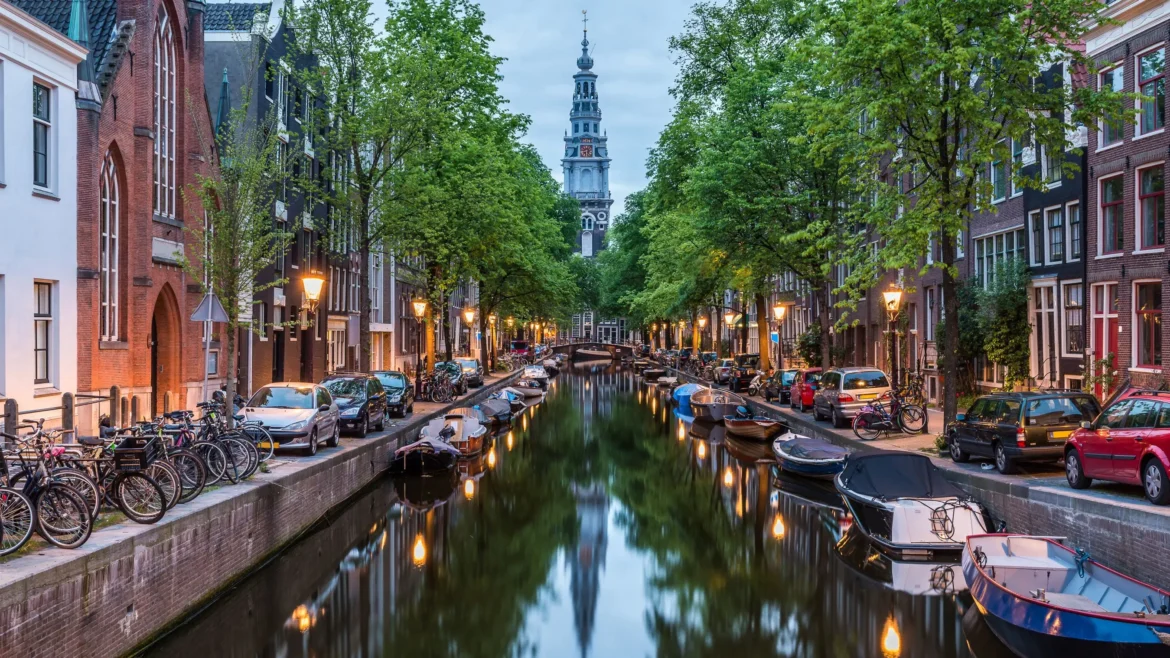
Amsterdam is one of Europe’s most captivating cities, offering a unique blend of history, art, culture, and natural beauty. With its picturesque canals, historic architecture, lively neighborhoods, and world-class museums, Amsterdam is a city that can easily fill five days with unforgettable experiences. Whether it’s your first visit or a return trip, a 5-day itinerary allows you to balance iconic attractions with hidden gems and local experiences.

You can stroll or cycle along scenic streets, visit museums with world-famous art collections, enjoy the city’s vibrant markets, and experience the warm hospitality of its cafés and restaurants. Each day in Amsterdam can offer a different flavor of the city, from exploring historic neighborhoods and bustling markets to enjoying peaceful parks and waterfront views. This guide provides a detailed day-by-day plan, travel tips, and insider recommendations to make the most of your Amsterdam adventure.

Day 1: Arrival and Canal Exploration

Your first day in Amsterdam should be a relaxed introduction to the city. After checking into your hotel, take time to explore the charming canals that define Amsterdam’s character.

Morning:
Arrive in Amsterdam and settle into your accommodation. Start with a gentle walk along the main streets near the city center to get your first impression of the canals and historic architecture.

Afternoon:
Take a canal cruise to enjoy the city from the water. A one- to two-hour boat tour gives a fascinating overview of Amsterdam’s history, architecture, and cultural landmarks while offering a relaxing start to your trip. Afterward, enjoy lunch at a café overlooking the water, sampling traditional Dutch snacks such as bitterballen or herring.

Evening:
Stroll through the Nine Streets district, filled with boutique shops, cozy cafés, and hidden courtyards. End the day with dinner at a canal-side restaurant, soaking in the unique atmosphere of Amsterdam at night.

Day 2: Museumplein and Cultural Highlights

Amsterdam is a cultural treasure trove, and Museumplein is the perfect place to start your immersion.

Morning:
Begin your day at the Rijksmuseum, home to masterpieces from the Dutch Golden Age, including works by Rembrandt and Vermeer. Next, visit the Van Gogh Museum to explore the life and vibrant works of the legendary painter.

Afternoon:
Take a leisurely walk through Vondelpark, Amsterdam’s largest park. This green oasis is ideal for a picnic, people-watching, or just relaxing after a morning of museum visits. If time allows, explore the Stedelijk Museum for modern art and contemporary exhibits.

Evening:
Dine in the Museum Quarter or nearby neighborhoods, enjoying a mix of international and Dutch cuisine. Consider attending a concert at the famous Concertgebouw if the schedule fits your itinerary.

Day 3: Historic Amsterdam and Local Life

On your third day, dive into the city’s rich history and vibrant local culture.

Morning:
Visit the Anne Frank House, a profoundly moving experience that requires booking tickets in advance. Afterward, wander the charming Jordaan neighborhood, famous for its narrow streets, art galleries, boutique shops, and historic courtyards.

Afternoon:
Explore Waterlooplein, a lively flea market with antiques, souvenirs, and eclectic items. Enjoy lunch at a nearby café and continue wandering the streets, soaking in Amsterdam’s local charm.

Evening:
Experience Amsterdam’s nightlife or enjoy a relaxing canal-side dinner. The city offers a variety of pubs, craft beer spots, and restaurants for all tastes.

Day 4: Markets, Neighborhoods, and Hidden Gems

Day four focuses on exploring local markets, neighborhoods, and off-the-beaten-path attractions.

Morning:
Start at Albert Cuyp Market, one of the city’s busiest street markets. Taste fresh Dutch produce, street food, and the famous stroopwafels.

Afternoon:
Visit Dappermarkt, a multicultural market offering everything from fresh fruits to clothing and handicrafts. Explore the eastern districts or take a bike ride to see more of Amsterdam’s creative side, including street art and quirky shops.

Evening:
Head to the De Pijp neighborhood for dinner, known for its vibrant cafés and international cuisine. Enjoy an evening stroll, discovering hidden bars and relaxed canal-side spots.

Day 5: Personalized Choices and Departure

Your final day in Amsterdam can be tailored to your interests.

Option 1: Museums and Art
Revisit your favorite museum or explore lesser-known cultural sites such as the Rembrandt House Museum or Hermitage Amsterdam.

Option 2: Parks and Local Neighborhoods
Spend time in Westerpark or discover creative districts like NDSM Wharf, known for street art and unique cafés.

Option 3: Shopping and Relaxation
Pick up souvenirs in the Nine Streets, enjoy coffee at a canal-side café, and take a final stroll along the picturesque canals before departure.

Travel Tips for Amsterdam

  • Tickets: Book popular museums and the Anne Frank House in advance, especially during peak tourist seasons.

  • Transport: Rent a bike or use trams and ferries for efficient city travel. Amsterdam is one of the most bike-friendly cities in the world.

  • Timing: Spring (March–May) is ideal for tulip season, while early autumn offers pleasant weather and fewer crowds.

  • Local Etiquette: Cycling is central to Dutch life. Always stay aware of bike lanes and follow local rules to ensure safety.

Read More: Kuta Bali: The Ultimate Beach Town Experience

Conclusion 

A five-day trip to Amsterdam allows travelers to experience the city’s rich blend of history, culture, and local charm. From iconic museums like the Rijksmuseum and Van Gogh Museum to historic neighborhoods like Jordaan and De Pijp, Amsterdam offers something for everyone. Visitors can enjoy leisurely canal cruises, explore vibrant street markets, and relax in lush parks, all while experiencing the city’s unique combination of tradition and modernity.

Cycling or walking along the canals provides an intimate connection to the city, and evenings can be spent enjoying local cuisine or soaking in the atmosphere at cozy cafés and pubs. With careful planning, this itinerary balances famous attractions with hidden gems, giving travelers an authentic and memorable experience. After five days in Amsterdam, you will leave with a deep appreciation of its culture, history, and distinctive Dutch charm.

 FAQs

1. How can I get around Amsterdam efficiently during five days?
Walking, cycling, and using trams are the best ways. Biking is highly recommended as the city is extremely bike-friendly.

2. Which museums should I prioritize on a first visit?
The Rijksmuseum, Van Gogh Museum, and Anne Frank House are must-sees for first-time visitors.

3. Are there day trips from Amsterdam worth considering?
Yes, options include windmills at Zaanse Schans, historic towns like Haarlem, or tulip fields during spring.

4. What are the best local markets in Amsterdam?
Albert Cuyp Market and Dappermarkt are popular for food, crafts, and local experiences.

5. When is the best season to visit Amsterdam for a five-day trip?
Spring (March–May) and early autumn are ideal for pleasant weather and scenic beauty, including tulip season.

0 comments
0 FacebookTwitterPinterestEmail
Kuta Bali: The Ultimate Beach Town Experience

Kuta Bali is one of Indonesia’s most iconic travel destinations. Once a quiet fishing village, it has transformed into a lively beach town attracting travelers from all over the world. Known for its golden sand beaches, spectacular sunsets, vibrant nightlife, and beginner-friendly surf spots, Kuta offers a unique blend of adventure, relaxation, and cultural immersion. Visitors come here to ride the waves, explore bustling markets, enjoy local cuisine, and experience the energetic social scene.

Its close proximity to Bali’s main airport makes it a convenient first stop for tourists. Despite its popularity, Kuta retains a charm that appeals to both solo travelers and families. This guide will take you through everything Kuta has to offer — from the best beaches and attractions to cultural experiences, practical tips, and insider advice — ensuring you can enjoy your trip safely, comfortably, and memorably.

Why Kuta Bali is Special

Kuta is more than just a beach town. It’s a gateway to Bali’s vibrant lifestyle and tropical beauty. Its long sandy beaches are ideal for sunbathing and surfing, while the bustling streets offer shopping, entertainment, and cultural experiences. Kuta is the perfect combination of relaxation and activity. Visitors can enjoy quiet mornings on the beach, afternoons exploring local markets, and evenings experiencing live music and nightlife. The town’s diversity makes it ideal for travelers of all ages and interests.

Top Attractions in Kuta

Kuta Beach

The centerpiece of the town, Kuta Beach stretches for kilometers along the coast. It is perfect for sunbathing, walking, or learning to surf. The beach offers soft sand, gentle waves, and a lively atmosphere where locals and tourists mingle. Watching the sunset over the Indian Ocean is one of the town’s most unforgettable experiences.

Waterbom Bali

This water park is perfect for families or anyone looking for fun off the beach. With slides, pools, lazy rivers, and shaded relaxation areas, it offers a fun way to beat the heat.

Kuta Theater and Shows

Experience Balinese culture through theatrical performances, traditional dances, and live shows that capture the island’s artistic spirit. These performances offer a break from the beach while immersing visitors in local traditions.

Vihara Dharmayan Temple

A serene Buddhist temple over 200 years old, it provides a cultural and spiritual experience amidst the lively town. Visitors can admire its architecture and peaceful surroundings while learning about local religious practices.

Beachwalk Shopping Center and Markets

Kuta offers both modern shopping malls and traditional markets. Beachwalk Mall has international brands and restaurants, while nearby markets allow travelers to shop for souvenirs, handicrafts, and local products.

Jalan Legian Nightlife

This main street comes alive at night with bars, clubs, and street performances. It is the heart of Kuta’s nightlife, offering a place to dance, enjoy live music, and experience the town’s energetic social life.

Activities in Kuta

Surfing

Kuta is world-famous for its beginner-friendly surf conditions. Surf schools provide lessons and equipment rentals, making it easy for newcomers to enjoy the waves safely.

Food and Cuisine

From local warungs to international restaurants, Kuta offers a wide variety of food options. Try traditional Indonesian dishes such as nasi goreng, mie goreng, and satay, or enjoy fresh seafood and tropical drinks while overlooking the beach.

Night Markets and Evening Walks

Evenings in Kuta are lively. Street markets, live music, and night cafes create a vibrant atmosphere. Evening strolls along the beach or through the bustling streets are a perfect way to experience local life.

Day Trips Around Kuta

Kuta is conveniently located for trips to Uluwatu Temple, Tanah Lot, Seminyak, and quieter beaches like Dreamland and Pandawa. These trips allow visitors to explore Bali’s cultural and natural beauty while staying close to Kuta’s comforts.

Practical Tips for Travelers

Safety

Kuta is generally safe, but petty theft and scams can occur. Always keep valuables secure, agree on prices before services, and stay aware of your surroundings.

Ocean Safety

Swim within lifeguard-flagged areas and be cautious of rip currents, especially during high tide. The beach is suitable for beginners, but safety should always come first.

Water and Hydration

Tap water is unsafe to drink. Stick to bottled or filtered water, and carry a reusable bottle to minimize plastic waste.

Best Time to Visit

The dry season, from May to September, offers sunny weather and calm seas. The wet season, October to March, brings occasional heavy rains and rougher beach conditions.

Environmental Awareness

Kuta’s popularity has increased pressure on its beaches and infrastructure. Dispose of waste properly, avoid single-use plastics, and support eco-friendly tours and businesses to help preserve the town’s natural beauty.

Where to Stay

Kuta has accommodations for every budget. From hostels and mid-range hotels to luxury resorts, there are options for solo travelers, couples, and families. Staying near Beachwalk Mall or Kartika Plaza offers easy access to attractions, dining, and nightlife, while nearby Seminyak provides a quieter alternative.

Read More: The Ultimate American Road Trip Guide

Conclusion

Kuta Bali is a destination that combines adventure, relaxation, and cultural richness. Its beaches, surf culture, vibrant streets, and family-friendly attractions make it a must-visit location for travelers of all ages. While it is lively and busy, careful planning and awareness can make the experience safe and enjoyable. From sunrise to sunset, Kuta offers moments of serenity, fun, and unforgettable memories.

Whether you are catching waves for the first time, exploring local markets, or enjoying the nightlife, Kuta’s energy and charm will leave a lasting impression. Its accessibility, range of activities, and welcoming atmosphere ensure that every traveler can find something special here. With respect for the local environment and culture, a trip to Kuta Bali is not only a journey of enjoyment but also a meaningful connection to the beauty and traditions of the island.

FAQs

1. What is the best time of year to visit Kuta?
The dry season from May to September is ideal for beach activities, surfing, and sightseeing.

2. Is Kuta Beach safe for swimming?
Yes, but swim in lifeguard-monitored areas and be cautious of strong currents, especially during high tide.

3. Can beginners learn to surf in Kuta?
Absolutely. The gentle waves are perfect for beginners, and there are many surf schools offering lessons.

4. What are the best family-friendly activities in Kuta?
Waterbom water park, beach play, cultural shows, and evening markets provide fun options for families.

5. How can I stay safe and avoid scams in Kuta?
Keep valuables secure, agree on prices upfront, avoid isolated areas at night, and be cautious of street vendors offering deals that seem too good to be true.

0 comments
0 FacebookTwitterPinterestEmail
The Ultimate American Road Trip Guide

Few adventures rival the excitement of an American road trip — a journey across highways and backroads that unlocks natural wonders, cultural landmarks, and unexpected local charm. Whether cruising the classic Route 66, winding along the Pacific Coast, or discovering historic byways through national parks and small towns, an American road trip promises freedom, flexibility, and memories that last a lifetime.

Spanning thousands of miles, these journeys let travelers engage with diverse landscapes, communities, and experiences at their own pace — all from behind the wheel. But hitting the road without a plan can be overwhelming. From budget and safety planning to route choices and cultural experiences, this guide will help you make your American adventure both rewarding and stress‑free.

1. Why an American Road Trip Is a Bucket-List Experience

The United States is uniquely suited to road travel:

  • Vast and varied geography: From coastal highways to desert plains, mountains, forests, and historic towns, the U.S. road network connects breathtaking landscapes.

  • Iconic routes: Roads like Route 66 have achieved legendary status, with roadside culture, vintage diners, and nostalgic attractions that capture the essence of American travel.

  • Cultural diversity: Each region has distinct food, music, traditions, and attractions — from Southern BBQ to New England coastlines or Southwestern canyons.

  • Flexibility & freedom: Unlike fixed itineraries of flights and trains, road trips let you choose timing, stops, pace, and even add spontaneous detours.

2. Choosing the Right Route: Classic & Must-See Drives

There’s no single “best” road trip in the USA — but there are iconic and highly recommended options:

Route 66 — The Classic American Trail

Often called the “Mother Road,” Route 66 stretches from Chicago to Los Angeles, slicing through eight states and offering neon signs, quirky roadside stops, and Americana culture at every turn.

Pacific Coast Highway — California’s Scenic Masterpiece

Also known as Highway 1, this route runs along the dramatic California coastline from San Diego to San Francisco, famed for ocean views, redwoods, and seaside towns.

Great River Road — Along the Mighty Mississippi

Tracing the Mississippi River from Minnesota to Louisiana, this route blends scenic beauty with cultural stops in small towns and river cities.

Interstate 90 — Coast-to-Coast Adventure

The nation’s longest interstate, I‑90 can take you from Seattle to Boston, weaving through varied landscapes and urban highlights.

Regional Highlights & Themed Trips

  • Blues Highway: Dive into music history across Tennessee and Mississippi.

  • Blue Ridge Parkway: Autumn foliage and rolling hills of Appalachia.

  • Southern Music & Food Tour: Southern cuisine, jazz, and blues from Tennessee to Louisiana.

3. How to Plan Your American Road Trip

Good planning ensures an enjoyable journey. Here are expert-backed steps:

Set Your Budget

Average road trip costs vary widely — from budget camping and DIY food prep to hotel stays and dining out. Expect around $150 per day as a general guideline.

Decide Duration & Distance

Think realistically about daily driving: long stretches can lead to fatigue. Plan shorter driving days with scenic stops. Ideally, many travelers aim for 100–300 miles per day.

Choose Your Vehicle & Safety Prep

  • Inspect your vehicle before departure — oil, tires, brakes, fluid levels.

  • Carry an emergency kit with tools, first aid, water, and snacks.

  • Learn local road rules and stay rested — taking breaks every few hours reduces fatigue.

Navigation & Tools

  • Use navigation apps or offline maps to calculate fuel, time, and interesting stops.

  • Download offline routes in areas where signal may fade.

Book Key Stays & Parks in Advance

Popular parks like Yosemite, Arches, or Glacier often require reservations — secure slots early, especially in peak seasons.

Fuel & Cost Savings

  • Gas prices can vary widely between states — plan refueling accordingly.

  • Pack food and drinks to reduce frequent dining costs.

  • Consider camping or RV parks versus hotels for a budget approach.

4. Road Trip Safety & Etiquette

Safety is key:

Driving Habits

  • Keep your gas tank above ¼ full — fuel stations can be sparse in remote areas.

  • Know road signs and speed limits — enforceability varies by region.

Respect Nature & Wildlife

  • In parks, stay on marked roads; keep distance from wildlife.

  • Follow Leave No Trace principles to protect natural areas.

Share the Road

  • Watch for large trucks and give them space.

  • Be patient with local traffic and road conditions.

5. Cultural Experiences & Local Stops

An American road trip is not just about scenery:

  • Historic towns & museums: Stop at local history sites and roadside museums on routes like Route 66.

  • Music & food: Experience blues in the South, BBQ in Texas, seafood in New England, and craft beers in the Rockies.

  • Festivals & events: Plan around local fairs, music festivals, or regional markets to enrich your trip.

  • Hidden gems: Small towns often have unexpected charm — antique shops, local diners, scenic lookouts, and friendly encounters.

Read More: Travel the World on a Budget: Nomadic Matt’s Ultimate Guide

Conclusion

An American road trip is more than a vacation — it’s a transformative journey through the heart of one of the world’s most diverse and scenic nations. From the retro charm of Route 66 and the coastal beauty of the Pacific Coast Highway to the cultural richness of the Mississippi River and the historic byways weaving through mountains and cities, every road offers its own story.

With thoughtful planning, safety preparedness, and a flexible approach that embraces the unexpected, travelers discover hidden gems, authentic local experiences, and unforgettable views at every turn. Whether you’re a first-timer or a seasoned traveler, this guide provides essential insights to make your road trip smooth, affordable, and truly memorable. Fuel up, map your route, and hit the open road — the adventure of a lifetime awaits, offering freedom, discovery, and memories you’ll cherish forever.

FAQs 

1. What is the best time of year for an American road trip?
Spring and fall are ideal for moderate weather, fewer crowds, and colorful landscapes. Northern routes are best in summer due to snow closures.

2. How much money should I budget per day?
A rough estimate is about $150 per day, including fuel, food, lodging, and activities. Budget options can be cheaper with camping or DIY meals.

3. Which route is considered the most iconic?
Route 66 is widely recognized as the quintessential American road trip, blending history, culture, and classic roadside experiences.

4. Do I need reservations for national parks?
Yes — many parks require timed entry reservations in peak seasons, especially Yosemite, Arches, and Glacier.

5. What safety tips should I follow on long drives?
Keep your vehicle well-maintained, rest frequently, monitor fuel, and carry emergency supplies. Drive cautiously and be prepared for varying road conditions.

0 comments
0 FacebookTwitterPinterestEmail
Travel the World on a Budget: Nomadic Matt’s Ultimate Guide

Traveling the world may seem like a dream reserved for the wealthy, but with the right strategies, anyone can make it a reality. Travel blogger Nomadic Matt has shown that smart planning, frugal habits, and resourceful thinking can turn even the tightest budget into a passport to adventure.

This guide will walk you through the principles, tips, and practical steps to explore the globe affordably, without sacrificing experiences or comfort. Whether you are a student, a professional with limited leave, or someone planning a long-term journey, these strategies will help you maximize your travel potential while minimizing costs.

Why Budget Travel Matters

Traveling on a budget is more than just saving money; it’s about unlocking opportunities and creating experiences that would otherwise be impossible. Budget travel allows you to:

  • Extend your trip: Lower costs mean longer stays.

  • Experience local culture: Staying in hostels or homestays often immerses you in local life.

  • Reduce stress: Financial flexibility makes trips less stressful.

  • Build travel skills: Negotiating, planning, and resourcefulness improve as you travel smarter.

Nomadic Matt emphasizes that travel is not about luxury but about meaningful experiences. Budgeting effectively frees you to explore deeper and more authentically.

Planning Your Budget Travel

1. Set a Realistic Travel Budget

Before you pack your bags, determine how much you can spend monthly and per destination. Consider costs like:

  • Accommodation

  • Food and drinks

  • Transportation

  • Activities and attractions

  • Travel insurance

Nomadic Matt suggests starting with a daily budget and adjusting based on destination. Southeast Asia, Central America, and Eastern Europe, for example, allow for lower daily costs than Western Europe or North America.

2. Choose Affordable Destinations

Your destination greatly influences your budget. Research countries where your currency goes further. Some top budget-friendly countries include:

  • Asia: Thailand, Vietnam, Cambodia

  • Central America: Guatemala, Nicaragua

  • Eastern Europe: Romania, Bulgaria, Poland

By focusing on cost-effective destinations, you can travel longer without financial strain.

3. Plan the Timing

Traveling during the off-season can save up to 50% on flights and accommodation. Avoid holidays and peak tourist periods, and take advantage of mid-week travel deals.

Saving on Flights

Flights often consume the largest portion of a travel budget, but Nomadic Matt has proven that smart strategies make them manageable.

1. Be Flexible with Dates and Airports

Flexibility can save hundreds of dollars. Consider alternative airports, mid-week flights, and layovers to find cheaper options.

2. Use Flight Comparison Tools

Tools like Skyscanner or Google Flights allow you to compare prices across months. Price alerts notify you when fares drop.

3. Consider Budget Airlines

Budget carriers often offer lower rates, but read fine print to avoid extra fees for baggage or seat selection.

4. Travel Slowly

The slower you travel, the fewer flights you take. Overland travel by bus, train, or ferry is usually cheaper and offers local experiences.

Accommodation Tips for Budget Travelers

Accommodation is another major expense, but creative solutions exist.

1. Hostels and Guesthouses

Hostels offer dorm beds and private rooms, often at a fraction of hotel prices. Many also include kitchens, enabling further savings.

2. Home Exchanges and Couchsurfing

Platforms like Couchsurfing or home exchange networks provide free stays with locals, fostering cultural immersion.

3. Short-Term Rentals

Airbnb or local rentals sometimes cost less than hotels, especially for longer stays. Cooking your meals also reduces daily expenses.

4. Volunteer or Work Exchange

Volunteering on farms or hostels in exchange for accommodation can significantly cut costs while offering unique experiences.

Food on a Budget

Eating well doesn’t have to break the bank.

1. Eat Like a Local

Street food, local markets, and small eateries are cheaper and more authentic than tourist restaurants.

2. Cook Your Own Meals

If staying in a hostel with a kitchen, buy groceries and cook your own meals. It’s healthier and cheaper.

3. Avoid Tourist Traps

Restaurants in tourist hotspots can be 2–3 times more expensive than local alternatives.

Transportation Tips

Transportation costs can quickly add up, but smart strategies help.

1. Public Transit

Local buses, trains, and subways are cheaper than taxis or ride-hailing apps.

2. Walk or Bike

Many cities are walkable or bike-friendly. It’s free, healthy, and allows closer exploration.

3. Travel Passes

Some cities and countries offer travel passes that reduce costs for unlimited use of public transit.

4. Long-Distance Buses and Trains

Overland travel is often cheaper than flights, especially in Europe, Asia, and South America.

Money-Saving Hacks

Nomadic Matt highlights a few universal strategies to stretch your budget:

  • Travel insurance: Cheaper in the long run than paying for emergencies.

  • Use cashback or travel reward cards: Earn points on necessary expenses.

  • Avoid ATM fees: Use local cards or withdraw larger amounts at once.

  • Negotiate prices: Markets, taxis, and small vendors often allow haggling.

Safety and Health on a Budget

Budget travel does not mean compromising safety or health.

  • Vaccinations: Check destination requirements.

  • Travel insurance: Protects against illness, theft, or accidents.

  • Stay aware of local customs and laws: Reduces risks.

  • Emergency funds: Always have backup money stored safely.

Travel smart, not just cheap.

Building Travel Experiences

The goal of budget travel isn’t simply to save money; it’s to enrich your life.

  • Cultural immersion: Budget travel often leads to more authentic interactions.

  • Adventure: Low-cost activities like hiking, local festivals, and free tours can be unforgettable.

  • Personal growth: Problem-solving, planning, and interacting with diverse people fosters personal development.

Nomadic Matt emphasizes that travel is an investment in experiences, not just souvenirs.

Read More: Best Things to Do in Colombia

Conclusion

Traveling the world on a budget is not only possible but profoundly rewarding. By planning carefully, choosing affordable destinations, and adopting frugal yet smart strategies, you can turn the dream of global exploration into reality. Nomadic Matt’s approach teaches that travel is about experiences, connections, and personal growth, not luxury or extravagance. Budget travel challenges you to be creative, resourceful, and adventurous, all while respecting your financial limits.

Whether through hostels, street food, overland travel, or volunteering, there are countless ways to explore without overspending. Remember, the key to successful budget travel lies in preparation, flexibility, and an open mind. Each step you take thoughtfully allows you to stretch your budget further, immerse yourself in local culture, and create memories that last a lifetime. Budget travel empowers everyone to see the world, one affordable adventure at a time.

FAQs

1. How can I travel the world on a tight budget?
Start by setting a realistic budget, choosing affordable destinations, traveling off-season, and using cost-saving strategies like hostels, street food, and public transit.

2. How does Nomadic Matt travel on a budget?
He combines careful planning, slow travel, budget accommodations, local food, and cost-effective transportation to maximize experiences without overspending.

3. Can I travel long-term without being rich?
Yes. Prioritize destinations with low costs of living, plan finances carefully, and adopt frugal habits like cooking meals, volunteering, or using travel rewards.

4. What are the cheapest ways to find flights?
Use flight comparison tools, stay flexible with dates and airports, consider budget airlines, and take advantage of flight alerts.

5. Is budget travel safe?
Yes, with preparation. Use travel insurance, follow local laws, stay aware of surroundings, and keep emergency funds accessible.


Word count: ~1800 words

0 comments
0 FacebookTwitterPinterestEmail